Four Mapels

Four Mapels
Showing posts with label local food. Show all posts

Friday, November 14, 2014

Magic Beans

It has been a while since I have tackled a keyboard and attempted to jot down much of anything. I could say that I have been busy, or lazy, or apathetic...all would be true and also none of them are true.  Sometimes I just  discontinue projects for a time and then come back when the mood strikes, or winter does....whatever it takes to find myself with a little more time and a few thoughts to ponder.

In this case it is beans.

"Beans, beans, they're good for your heart. 
The more you eat, the more you fart. 
The more you fart, the better you feel. 
We should all eat beans at every meal."

This little rhyme, sadly enough, is what is typically trapped in my head from about June until sometime in September because one of the main focuses of the summer season is.....beans.

I can't say that beans are exactly my favorite crop (that honor goes to garlic), but they certainly are a useful one.

They are good early in the season as green beans  At this stage we pick them and eat them almost as fast as we are able and the ones we don't eat, we freeze for winter's lean months.  But, if you get busy and don't get them picked, they dry well and then you can eat them that way too.
They are a forgiving crop and ridiculously easy to grow, and in my life, that counts for a lot.

Beans come in more varieties than I would ever care to name, but there are somewhere in the neighborhood of 40,000 different varieties of beans.  Of course you wouldn't know that living in Iowa....here there seems to only be one....soybean.

Personally, I grow three different varieties - two of them I plant on purpose (one pole and one bush) and the third one is a freelance pole bean that self seeds and sprouts every year and then I just transplant it to where I want it to grow.  My main producer, however is the bush bean known as Black Valentine.  It is a dual purpose bean that makes nice green beans as well as a wonderful dried black bean.  What is the difference between a bush bean and a pole bean? One grows as a bush and one will trail and spiral its way up a tall pole.  In tight spaces the pole beans are nice, but when you have more space and don't want to have to deal with a pole or trellis, bush beans are optimal.

When asking people today where they get their cooking beans, I am almost universally met with a blank stare followed by some line amounting to, "well, we just use canned beans from the store," and then they look at me as though I am just not quite right in the head, I mean, where else would a person get beans, right?  Once again, people have forgotten how ubiquitous beans used to be.

Beans are one of the crops that have been cultivated the longest.  Native Americans would grow them together with corn and squash in a "three sisters" planting - using each of those three plant's best qualities to help the other two grow well. The colonies, and particularly Boston, perfected the baked bean.  From the colonies they were hauled overland in covered wagons and were a large percentage of the diet of the early pioneers - they were high in protein and fiber, transported well, grew well and could be saved for incredibly long periods of time. No cowboy dinner would be complete without a plate full of beans, and what kind of Mexican restaurant would it be without refried beans on the side?

 But chances are, if I put five beans in the palm of a person's hand today, they wouldn't know where to start with growing or cooking them.

So let's start at the beginning.  Someone gives you five magic beans....what do you do?


These beans - they are a fairly large seed in and of themselves.  Easy for even small children to plant.
1/2 - 1 inch down in the ground and roughly 6 -8 inches apart.

Keep them weeded.  Invite your friends to help.

Pick them green when the pods are long and full, but before the seeds inside start to mature.  They should "snap" easily in half - crisp and tender.  At this stage they can be steamed for 7 - 12 minutes until they are bright green and just slightly tender.  Seasoned with salt and butter, they are likely the first vegetables to be devoured at dinner.
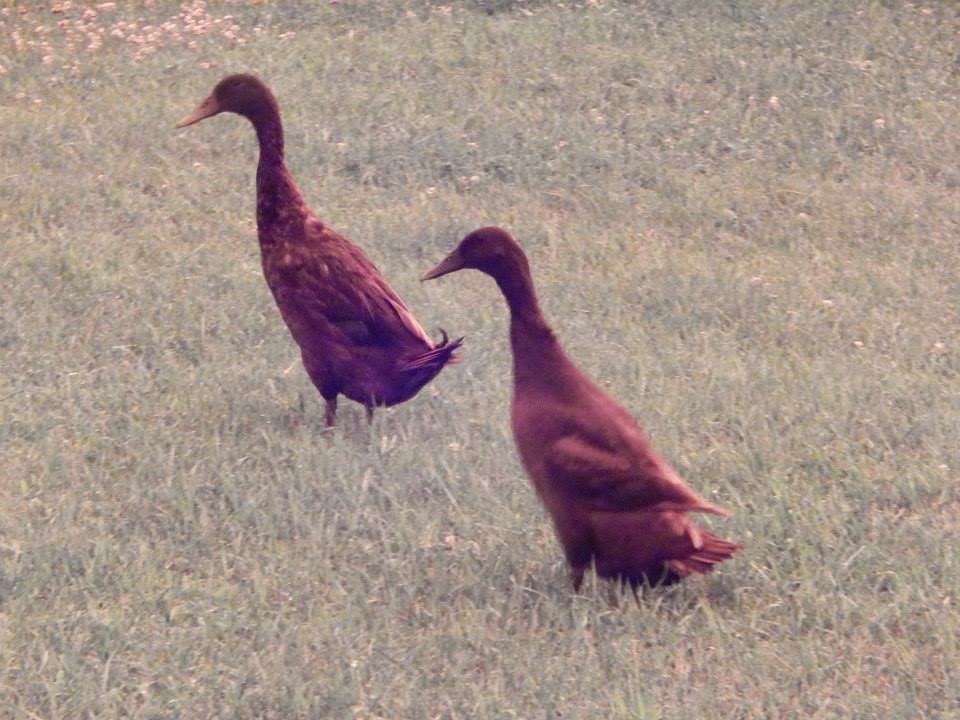
Miss a week or two of picking the green beans, but keep the weeds down and then let the pods start to turn light tan and dry.  If you thought you had a lot of green beans, just wait until the dried beans start to show up.  I usually give myself some sort of limit as to how long I will pick each day.  I typically pick one pillowcase sized sack full any time I have a free hour or so.  This is when that little rhyme sets up shop in my brain and refuses to leave until I find myself simply singing it while kneeling in my bean patch.... this can become a monotonous job, but then again, watching a sun set or watching a summer storm quietly build while picking is more meditative than monotonous. And communing with the bees and the beetles as well as the occasional visit from my ducks waddling through would often make this one of the more contemplative jobs that had to be done.


After each picking, I dump the bag's worth of beans out on my porch to dry. And by dry, I mean the pods have to be so dry that they crack open with relatively little pressure and reveal a dried, black (or brown, or spotted depending on the type) inside. Sometimes this drying takes a day or two and sometimes weeks.  It is also largely dependent on whether or not I have time to deal with them - beans drying in the sun are amazingly patient.

When the time is right, pack them back into the bag you picked them with....I know this sounds redundant, but bear with me.

Jump up and down on the bag and then dump them into a large bowl or pail. (My littlest kids think this is great fun) Set up a large house fan on high and, while standing in front of the fan, slowly dump the beans from one pail into another with the air blowing away the chaff.  This takes time, but slowly, by crushing the remaining pods and winnowing out the chaff, a hill of beans will emerge.  I can usually spend an evening winnowing beans on my porch and end up with 3 - 5 pounds of relatively clean beans by the time the sun sets.

At this point I usually take the bowl of beans into the house and find a movie that I know by heart and sit down to sort through them by hand to pick out the "bad" ones.  This is a completely mindless task, but one that, for one reason or another, is also very soothing - probably because the "finished" beans are so pretty and fun to sink your hands into.

I know....I know....this is a lot of work for a measly hill of beans, but now...those 5 magic beans have become hundreds (if not thousands) of beautiful, protein rich beans that can be saved and eaten through the winter in soups, stews, or even as a most amazing black bean dip.  On average, for a family of 7 people, we will have several gallon jugs filled as well as a 3-4 quart jars.  These, then, become the staple in chili, ham and bean soup, black bean dip and baked beans.

To cook:  Take 1 cup of dried beans and cover with water - place in the fridge overnight to soften. Then, to cook, put in a pot with water and boil until they are soft being sure not to let the water completely boil off.  Drain the beans (or don't - depending on the recipe) and use in whatever bean recipe strikes your fancy.  This really is ridiculously easy but it does require time and a little planning ahead.

Black Bean Dip
   1 cup black beans boiled and soft 
(reserve some of the fluid they were boiled in)
1 -2 cloves of garlic
fresh cilantro
salt to taste

Mix the cooked black beans and roughly 1/2 cup of the water they were boiled in, the garlic cloves, cilantro and salt into a blender or food processor and mix until smooth (adding more water if necessary to make a bean dip consistency)  Salt to taste and eat with tortilla chips.

I make a batch of this and it is gone before it has time to cool off with hungry kids around.

These beans, these magic beans, are magic in so many ways.  Not only do they provide and incredible food source, but while they are growing, their roots bind nitrogen in the soil and help it to become more fertile.  They are a restorative crop and one that I plant in areas where the soil was plundered by other crops the last year - crops such as corn which are horribly greedy plants that strip the ground of its nutrients to produce a huge plant that supplies only 2 small ears of edible goodness.  Beans, relative to their size produce more edible produce than many of the other plants in the garden.

 Yes, they take time to plant, and cultivate, and harvest and dry and process and cook.  But there is some magic in that time as well  - sunsets watched, rain clouds rejoiced, bees observed, kids laughing and playing rhyming games while weeding, a teenager helping to make bean dip- a connection to the earth, each other, the plants and the food that you grow and harvest with your own hands.  There is a strange sort of connectedness in that process.

Not only do they feed the ground and the body ....they feed the soul.  Magic indeed.


Sunday, May 11, 2014

Free Food

Every spring I am rewarded for my laziness. While many gardeners and farmers clean up their gardens before the first frost, I become my usual slothful self and decide that I would rather spend what little energy I have left freezing and canning my garden's bounty and skip clean up all together.

It pays off in the spring.

But you have to be patient and pay attention.

All too often in the early spring, I would be in such a hurry to get the garden clean and tilled and ready to plant that I would miss all the food just waiting for me.  I would plow it under before it even showed itself.

Every fall, that lettuce that you didn't take the time to uproot....it goes to seed.
Those cucumbers that you neglected after you had enough pickles made and stored....they went to seed.
That spinach that bolted and became too bitter to eat....it went to seed
That somewhat rotten onion that you didn't want - it sprouted again and is now beautiful
The garlic that you didn't pull....it's back and bigger than last year.
The parsnip you forgot to dig up - they are sweeter than ever now and ready to eat.
And so is that carrot!

And not only that, but Mother Nature is the best almanac for when to plant things you will ever find.  In general, when seeds are naturally sprouting outside in the cold spring, it means those seeds can handle it, so if you want to start neat and tidy rows of food, you probably can - even though the almanac and the seed packets may say otherwise.

There are all kinds of wives tales about "what is the best time to plant _____?"  For corn it is when oak leaves are the size of a squirrel's ear.  I don't know how many people have actually even seen a squirrel's ear?  I tend to just wait for the random forgotten ear of corn to suddenly sprout into action.  Even after a long, sub-zero winter, it will happen.

This is, of course, provided you use seeds that haven't been genetically modified to only sprout once.  Heirloom quality seeds or organic seeds cost more, but they will more than pay you back in their ability to produce fantastic quality foods with minimal work (or in this case, no work), year after year .


So, while other enterprising gardeners are busy cleaning, tilling and planting, I am busy harvesting the fresh spinach and lettuce from the garden - the first crop of greens so long awaited in the many months of cold.

 What we don't immediately harvest and eat, I transplant into more recognizable and organized rows.  The transplanting slows it down a bit and extends the season for a few more weeks.

So many times while gardening I have marveled at man's belief that we know what we are doing and are "in charge" of growing food.  While it is true that we are the caretakers of the produce, Mother Nature already has the system down and knows the perfect timing and temperature for it all.

Wednesday, February 26, 2014

Sometimes It's Cold

It's cold.

It's freakishly cold, and what is worse are the people who keep saying "It's cold!" as though this is something that they can't fathom happening in February in Iowa.

"No kidding?" I say as I go out for a run, or clean a barn in the sub zero weather. "Well, we had better get used to it.  And while we are getting used to the cold, we better be good with draughts, tornadoes, floods, earthquakes, and tsunamis as well."

I think my patience for people is running very thin right now.  I have moments when I can see how people completely snap and feel the need to cause a scene, if only to have their message finally get out there.  Individually, most people seem to get it, but collectively we are a bunch of dunces when it comes to figuring out how to make a change.

An example that pops into my head this morning came from a client of mine.  He and his wife run a small business in our local town and are two very wonderful people, kind, and well versed in supporting the community. Myself, being the veterinarian for their pets, gave them a recommendation for a medication that can drastically help their pet and the offer to have that medication filled immediately at my office, they opt instead to go shopping on-line.  Now don't get me wrong, I understand the desire to save a few bucks as much as the next guy, but here's the thing….when faced with small business owners struggling to make ends meet (which, you will remember, these clients are as well) or big box stores that undercut us in costs and monopolize all the product so that we end up having it back ordered for months at a time….which one is likely going to help the local economy more?  Seems pretty simple right? You go with the small business owner.  But time and time again, people know what needs to be done on a larger scale, but when it boils down to the individual they think, 'I'm sure there are others buying locally so if I save a few dollars, it won't be a problem'.

It's a problem.
It's a big problem and it is only getting bigger.

Every dollar spent is a vote for how we want the world to be….every dollar.

The increase in farmer's markets, healthy food, and small cooperative grocery stores has been a bright spot, but the blow back from the large food companies has been huge - the advertising and marketing campaigns alone have been enough to boggle the minds of the average consumer to the point of throwing up their hands and saying, "Oh, what the heck! I don't know what to eat anymore so I will just go get a McRib and a shamrock shake!" …..game, set, and match for big agriculture right there and quietly another organic farmer goes bankrupt.  People vote with their forks three times every day, and every meal counts….every meal.

Is it that people understand it, but just don't think it applies to them?  Or are they so easily confused and mesmerized by fancy advertising? Or maybe they are just too tired from working their three part time jobs to make ends meet that they just don't have the time to do the necessary research to understand the issues.

I spent the evening last night watching Brooklyn Castle with my kids.  A documentary about kids in a 'below the poverty line' school learning chess and winning national championships.  Sounds crazy, but it was impressive and such a fantastic way to keep these kids engaged and learning in all of their subjects.  But like so many schools these days, their funding is being cut. Why? Where does this funding go? ….to pay off wars?, to cover for the many bad decisions of bankers?  Cutting educational funding is the most ridiculous thing a country could possibly do. It is like having the makings of a star athlete and then cutting off his legs.  Children are the investment in all of our futures, and we can't stand idly by with our hands in our pockets and say, "but I don't want to pay taxes anymore! We need a tax break!" What we need is an equitable tax that helps support education to its fullest degree. And please don't hit me up with the "charter and private school" theory or we are right back to the top paragraph with the "big box stores/ controlled by corporations" discussion because eventually, that is where a lot of those schools end up - funding coming from large corporations or sponsors that can foot the bill and control what the kids ultimately end up learning.  Public school - as in sponsored by all of us, for the education of all our children is still the best and most broad base start we can give them.  Every kid will one day have a say in how this country runs…..every kid.

Okay, so my little rant is over, call it cabin fever, call it my pressure valve so I don't go out and completely loose it with the population at large.

When it comes to this weather, we get what we asked for, in my opinion.  I know I can send off any number of letters to Congress and the President, I can shut off any unnecessary lights in my house, I can contact the utility company and opt to pay more for the renewable energy, but until
every single person stands up and says, "No more coal and oil! No more fossil fuels! Renewable energy only!" - until that point, there will be enough muddying of the water by the coal/oil/gas industries to keep people confused and questioning, there will continue to be lobbyist money that gets passed across (or under) the table to our "elected leaders" and there will continue to be environmental changes that we are not equipped to handle.  Who knows, before long maybe Hell really will freeze over.

Until then….bundle up and stop complaining.

Thursday, January 26, 2012

Going Around the Bend

"The food you eat can be either the safest and most powerful form of medicine, or the slowest form of poison."
- Dr. Ann Wigmore, ND

It has been pointed out to us several times lately that we (meaning my husband and I)  have "gone round the bend" a little with regards to food.  Some come out and say it simply, "You guys are nuts!", others (like my mother) are more subtle, "Oh, it was nice to go visit your sister, we could talk about food....she even goes to Sam's Club" to which I give a small, involuntary shiver of horror and then smile and nod politely.

I don't deny that we have drastically changed how we live in the last 8 years and we actually are aware of how unusual we must come across to people.  We sometimes go out at night to the local bar and eat nachos and drink cheap beer and discuss how stilted we have become about our food while playing a few games of pool, but here's the hard part....once you know the truth about food and what you eat, how do you put the blinders back on and go back? 
Our progression into "craziness" went something like this:
  • Watching one of your children become sicker and sicker wondering what was going on!
  • Child diagnosed with a genetic disease that causes her body to react to gluten.
  • Realizing that gluten is in just about everything.
  • Freaking out in grocery store over what to feed your two -year-old that won't end up poisoning her.
  • Learning to read labels.
  • Wondering what exactly carrageenan, carnauba wax, and soy lecithin actually are.
  • Finding out what they are.
  • Applying Occam's razor to the food concept and realizing that, in general, the simpler foods are the better they tend to be for you.
  • Finding a source of these "simple" foods.
  • Realizing that it is cheaper and a ton more fun to raise/grow/process/store them ourselves.
  • Raising/growing/processing said food.
  • Watching as your friends, neighbors and relatives all think that we have slipped off the deep end.

The luxury, (and I do realize what a luxury it is) is that we have time.  We have had a lot of time.  Time to read, to research, to analyze, to try stuff out, to grow food, to process food.....it uses a lot of time.  We have, by some small miracle that I haven't quite figured out yet, set ourselves up to get by on only one income from one outside job.  In today's society, that is no easy feat.  To some extent it is because we really don't want anything - no cable TV, no high tech gadgets, no brand new cars, no foreign holidays, no new clothes, nada.  We do without and, personally, I am totally cool with that.  Less overhead equals less income needed to support it.  "Simplify, simplify, simplify"....Thoreau was on to something there.  So our entire source of entertainment comes strictly from living and raising our kids in the best way that we can.  One way to look at it is that I have learned to garden, can food, raise chickens, spin thread and knit due to sheer boredom, but the irony is that I am not bored....ever.  Maybe it is a mindset that we have fallen into that we actually love what we are doing all the time, instead of constantly working at a job that we hate so that we can go out and have fun later.

In my mind it comes down to the fact that every man, woman, and child on this planet has 24 hours in each day in which to do something.  For the great majority of us, what we do during those 24 hours is not likely to be earth shattering or life changing to the population at large, but what we can do for ourselves and our family can have a very large and lasting impact.  Thinking back to the jobs that I have held - waitress, food service worker, lab technician, animal caretaker, veterinarian - none of those.....none.....have meant as much to me as taking care of my kids and family.  I am never happier then when I am home, either working in the garden with the kids raising food, or cleaning a barn taking care of animals that I know will help to feed us. There is a very direct relationship between these activities and the lives we lead.  Working at a job, for me, is an indirect relationship - still very helpful and necessary, but not nearly as fulfilling.  It is a very basic desire - to provide for oneself and family. 
 
Another reason we have jumped off the deep end with regard to food....it's political.  Eating a meal, feeding your family, buying groceries - those things are political statements whether you want them to be or not.  Where your fork goes, so goes your money.  Buy your food locally and your money goes locally.  Local money, creates local jobs.  Local jobs help to maintain local infrastructure.  If you understand the food market - from how the food is grown, picked, processed, inspected, shipped, stacked and purchased - then you have a pretty good handle on how messed up the system actually is. All too many of our kids (and adults) think that the food just magically appears in the grocery store without any thought to the deep and twisted roads that food must take to reach those shelves.  For instance, if you don't like big capitalistic businesses, then don't buy things containing high fructose corn syrup or soy because most of the corn and soy in the country is planted, grown and chemically sprayed by Monsanto and other big Ag corporations.  If you don't like illegal immigrants then don't buy produce that has been harvested by immigration workers.  If you don't like government agencies then don't buy meat that has been inspected by the USDA.  If you don't like pollution then don't buy groceries that have been shipped thousands of miles so that you can have a nice ripe strawberry in December.  Hard to know what to buy now isn't it?  All over the board there with political problems and no one party is to blame.  We have simply chosen to cut out the middle man entirely and just raise our own or buy it as locally as we can from people we know.

So yes, we have 'gone round the bend' and will probably continue to do so until such time as the population at large realizes what a screwed up mess the food system is and actually takes steps to change it.  My guess is that when the food system changes, so will the medical system because people will suddenly realize what they have been doing to themselves for so long.   In the meantime, fair warning for any friends and relatives that come to the door for dinner, you may be asked to eat such things as organic, homegrown potato soup with onions grown in the garden outside and cheese that was produced in my kitchen.  I know it is a hardship when you really crave Sam's Club frozen fish sticks, but we do what we can to please, and I promise you won't leave hungry.

"A bend in the road is not the end of the road...
unless you fail to make the turn." ~ Unknown

Thursday, December 29, 2011

An Open Letter to My Alma Mater

Dear Iowa State College of Veterinary Medicine,

 Thank you for the sound education you gave me regarding anatomy, physiology, bacteriology, dermatology, pharmacology, internal medicine, surgery, histopathology and any number of other 'ologies' that I am sure I have forgotten more of than I ever imagined I would learn.  I am, however, most unhappy with the status of education of production animal medicine. The thing that always sparks me off in this regard is typically a comment or article in the quarterly published Gentle Doctor magazine that I receive since I am supposed to be a happy alumna of the college. This month, it was one of the bullet points in the Dean's Letter p.3 (#4 to be exact)
     
 "Establishment of the Swine Medicine Education Center, a collaborative effort that provides unmatched access to a modern production system that includes 90,000 sows and nearly two million pigs and complements our swine, beef and dairy summer programs, and our rejuvenated food animal field services unit." [emphasis is my own] 

You are supposed to be perceived as the "leader in production medicine" also known as "food animal medicine" or to those lay people that may be reading this, "meat".  You are a land grant college in the very middle of the American Heartland, dedicated to the science an innovation involved in feeding the masses, and yet the system is terribly broken and you are all busy trying to fix the system using more of the same technology that broke it in the first place.  

 Stop.  Look around you. 

The world is slowly waking up to the food that they eat and what it is doing to us.  This is clearly evidenced by books like The Omnivore's Dilemma by Pollan and movies such as Food Inc.  You may have not read or watched them yourselves, but you should.  The research being expressed by these people is sound and, what's more important, makes good sense.  You taught me to look at research objectively and I have....theirs is better than yours.  It shouldn't take more antibiotics to grow our meat, it shouldn't take chemicals to sterilize our food, it shouldn't take people dying from food borne illnesses for you to wake up and realize that maybe nature might have a better way. 

Is it because the large pharmaceutical companies won't pump millions into the coffers that you so desperately need to keep going?  Is it because big businesses like Monsanto, Cargill and Pfizer will leave you high and dry if you actually do what is right and study the differences between organically grown, sustainably managed, pasture fed animals and the high stress, GMO corn-eating, pseudo-food animals that are currently being produced by IBP and Tyson?   For shame.

Well, just so we are clear, this is one veterinarian that you trained that will not be contributing to your college unless it is to train the next generation of veterinarians to think for themselves and wake up to what is happening to our animals.  We take an oath at the completion of our vet school education, an oath to protect the welfare of the animals we treat, to speak for those who cannot speak for themselves and yet here we are locking them up in confinement operations that are clearly NOT in their best interest.  I would like to see any one of you live one day in a space confined such that you couldn't all lay down at the same time and there was so much fecal material in the air around you that it was difficult to breathe.  Or maybe you should all be housed over your own excrement for a while and in such a noisy environment that you can't sleep unless you are completely exhausted.  We have all heard what stress does to our own systems and yet we expect our animals - those that will give their lives so that we may eat - to endure such conditions so that our clients can make the most money per unit.  We have lost track of the fact that those units are, in fact, animals.  Veterinarians should be leaders in this area....we know better and yet we are following - following the big Ag money.   Being led along by our noses in the hopes that we, too, might make a bigger piece of the pie at the expense of all those that we are supposed to be minding the welfare of - the animals and, as a result of that, the people that eat them.

Take a stand.  Will it mean money lost? Probably! Will it mean healthier animals and people? Absolutely! And the people that are waking up to this monstrosity will flock to your doors and beg to learn what you can teach them, or beg for the services of the veterinarians that you graduate.  Be the leader again, please, so that I can once again feel pride at calling you my Alma mater rather than cringing when someone points out that, once again, there is a food recall or thousands of eggs that have been contaminated and the only option is to simply throw more antibiotics or more federal regulations at them. 

We need small farmers in Iowa - not corporate giants.  Iowa is a dying state.  Most of these students that you are teaching right now will likely flee these borders like so many rats from a sinking ship. Wonder why there are a dwindling number of food animal veterinarians? I don't. With corporate giants running the show, how many vets do they really need? There are more large production units and more CAFOs in Iowa than in several of the surrounding states, there is more transgenic corn and soybeans grown here than almost anywhere else.  We need to diversify. 


My own role in this has been to conduct some of my own experiments. Once again you taught me to pay attention and keep records and for this, I thank you.  I can honestly say that there is a clear, distinguishable difference between the eggs that are raised in confined "caged batteries of birds" vs those from my flock of free range hens. I also raise a few pigs, a dairy cow and we buy all our beef from a local farmer that raises them on pasture.  The differences in our food quality and thus our health are substantial. And by supporting local farmers I am helping to ensure that small town Iowa actually has a chance to survive.

I realize that I will very likely not be high on the list to win any of the prestigious awards distributed to the "good soldiers" of the veterinary profession, but it is my honest belief that if you don't periodically stir the pot, all the scum rises to the top. I feel it is my obligation, as outlined by the oath, to continue the improvement of my professional knowledge and competence and so I put this challenge to you as directly as possible.....Lead, don't cave into big agriculture corporations that threaten to undermine this profession and ruin the trust that the populace has previously had in the veterinary community.  Lead, find a better way, a more humane way, a more sustainable way to raise the food that we need to live on.  Lead, so that others will actually want to follow. 

Monday, March 21, 2011

House Bill 589

I know I should stay out of politics, but I am a lot like a moth to a flame - I know I will be torched, but I am just drawn to it, especially when it has to do with farm legislation. Recently a bill has been passed in the house of representatives in Iowa that will make it a felony to videotape any farms without the farmer's permission. House Bill 589. This I find very disturbing. I know it is their farm and they should have privacy to farm as they see fit, but at the same time they are raising food that people will be eating and we, too, should have some right to know how those animals are raised and handled. Farming has gone from being about small family farms to an industrial machine and I find it frightening that the consumers have no knowledge of what goes on behind those closed CAFO doors. The argument, of course, is that if you "see" something you are to report it to the proper authorities. Good luck with that. First of all, you can't "see" what goes on inside those confinement units - you can't see if the air is so polluted that the animals can hardly breathe, you can't tell if the animals are too crowded and therefore over stressed, you can't see if they are periodically beaten about by handlers. There is no transparency to a CAFO building. Second of all, who are the "proper" authorities? As a veterinarian I have come across instances of needing to report abuse and it can get a little dicey trying to figure out who to contact that will actually see that something is done - unless you get media on board and then enough people get angry and the "authorities" are then forced into having to actually do something about a case. There is just not a lot of accountability for some of these farmers. Dairy farmers are probably monitored the best. Their bulk tank where all the milk goes gets checked each time the trucks come from the dairy to collect the milk and if there are any illegal antibiotics in the milk, or the cell counts are too high, there are repercussions. We have no similar system in hog, chicken or turkey confinements, or in the production of beef steers. Maybe there should be a law requiring a camera placed in every confinement unit that are uploaded to a web site.....if we monitored our food like we monitor the eagles in Decorah, the entire food system might be vastly different. The biggest thing that worries me is, what are they trying to hide? Clearly, to go through all the work and effort to make a bill that will make it a felony to photograph or videotape animals that may be abused or neglected.....what are they afraid of? That they will be caught? I just don't think it is worth the time and money to pass this legislation. I think that if farmers are worried that they will be videotaped and exposed for animal neglect and cruelty, then maybe they should rethink how they are doing business. And for the consumers, I think that they should take legislation like this to heart and know that the farmers in these states apparently have something that they want to hide.....I, personally, would not want food from those farmers. It comes back around again to "know your farmer". Anyone wondering what kind of food I grow or how my animals are treated....they are welcome to come out and visit any time and I will be happy to give a tour and let you take pictures - that is what I would want from a farmer if I was buying food from them, and yet most of the country goes out to eat or cooks food at home without the foggiest notion of where their food came from or how it was treated. Needless to say, I have called my state senator and let him know my thoughts on the issue in the hopes that this bill can be killed in the senate. I would encourage everyone else in Iowa to do the same if you care at all about the food you eat. It just doesn't seem to be a bill that is worth while - it decreases the transparency of the food system rather than increasing it and while I can see the farmer's point behind wanting some privacy, I cannot account for their wanting to hide whatever monstrosities they may be committing and if they truly fear being photographed or videotaped, they need to reconsider what they are doing. The fear of media attention is the only check and balance that we have for many of these farms at this point.

Wednesday, February 16, 2011

Our Chickens Have Only One Bad Day

There comes a time in every chicken's life.....today was such a day for four of the young males on our farm. We have known and loved these chickens since the very day they emerged from their shells. They have lived a life of chicken luxury with organic food to eat, a large fenced in yard in which to roam, other chicken friends to communicate with, but on our farm one rooster is, at times, more than enough. Our day of reckoning varies depending upon exactly when chicks hatch out, so we sometimes find ourselves having to deal with chickens in less than ideal weather, but we have developed enough of a system that regardless of whether it is July or the middle of December, we can make it happen. We usually know that it is time to organize the chicken posse when the hens start looking a little harried. Too many roosters to deal with can lead to some fairly stressed hens. This usually coincides with the roosters just starting to learn to crow, so as the adolescent vocal cords are just warming up and gaining some volume our knives are quietly being sharpened. This is one of our least favorite tasks that has to be done on this little farm, but it comes with the territory of raising our own food, and we view it as a responsibility that we have to these birds to see that they are handled well and don't suffer any longer than absolutely necessary. I have explained it to my kids like this......we eat chicken - we can get it from the store, or we can raise it ourselves. A chicken from the store lived out its entire life in a small cage, never saw the sun, never chased a beetle through the grass, never crowed out its defiance and domination of the hens, never scratched away merrily at the earth worms in the dirt. Our chickens do all those things and more. If we believe in eating happy, healthy animals that we raise ourselves, then we should be able to butcher said animal. The chickens that we get from a store are scooped up, plopped in cages and driven for many miles to a processing plant with much terror and stress in the process.....our chickens get picked up and within 3 minutes it is all over. Our chickens only have one really bad day, and actually more like only 3 really bad minutes. Now, if you have a squeamish stomach, don't continue on with this post because what follows is a graphic depiction of butchering a chicken. Why? Because when we first purchased chickens and hatched out this crazy scheme to raise and butcher our own chickens, there wasn't a good source of common sense description of what was to be done. Thankfully, I invested 7 years of my life becoming a veterinarian.....glad that my education can pay off somehow....and in those 7 years I became well versed with anatomy and the best way to separate a body from its internal parts, and butchering is really just one step below surgery. *********** Stop.....seriously! If you don't want to think about butchering chickens.....stop! If you are interested, however, in how a chicken gets processed (and even the ones in the store have to go through this ) then carry on. But don't say I didn't warn you. I apologize in advance for the poor picture quality....I was inside with one incandescent bulb and chicken liver covered hands The Day Before Reckoning Day Before a chicken meets the butchering knife it is best if they are kept off food for 24 hours to help empty out the digestive tract. We separate ours by putting them in a smaller "hut" with water and their other doomed friends. Reckoning Day A few key items to have on hand:
  1. Sharp knives....and by sharp I mean as sharp as you can get them because they will dull quickly.
  2. A cone-shaped holder. Sometimes called a "killing cone" for reasons that will be explained later.
  3. A large pot to boil water in that will also hold a chicken
  4. A bucket of dilute bleach water and a few rags for any clean ups that may have to take place
  5. A place to hang the chickens to bleed out
  6. A place to hang the chickens for plucking off feathers
  7. A blow torch or other mean of controllable flame
  8. A clean table upon which to dress out the chicken
  9. Rubber bands - one for each chicken
  10. 2 gallon freezer bags
  11. Sharpie marker
  12. Latex gloves
  13. A bucket or other garbage storing device that you can throw the entrails, feet and heads in
You're still reading.....I can only assume that your curiosity has gotten the better of you. The first time that you behead a chicken, it can be a little unnerving. They really do flop around a lot so the saying "running around like a chicken with its head cut off" has some basis in reality. We catch our bird and hold him upside down. When held like this they tend to relax and become sedate. We then insert them head first into a cone that Keith made using some somewhat rigid plastic material. These can be commercially bought and are sometimes known as "killing cones". The head protrudes from the end thus allowing either slicing the jugular vein or decapitation. We do the decapitation procedure. I prefer not to have my hands anywhere near a flying axe so we put a twine noose around the chicken's head and that is connected to the fence with the chopping block at the correct point to allow for contact with the chicken's neck. I hold the chicken and control the feet. One quick drop of the axe and they are no longer aware of anything that happens. A quick end to a lovely chicken life. I would have a picture at this point, but it takes both of my hands to hold a crazy headless chicken and there is no way that I would delay this event in the life of a chicken to take time for a picture. The cone is a useful device. It controls the wild antics of a chicken not in possession of its head. Without a cone the wings flap wildly and it creates quite a mess of blood everywhere. With the cone, the wings are contained and the chicken can be held above a bucket and most of the blood can be caught. I usually start walking with the chicken to where it will be hung up since I live in the country and a little blood here and there is quickly washed away with the next rain. The "crazy flapping" is usually over within about 30 seconds as the muscles of the body run out of oxygen and the nerves stop reflex firing. Our chicken butchering is set up into four areas/events
  1. Decapitation
  2. Draining
  3. Plucking
  4. Eviscerating
Both Keith and I tackle the first part, the second event happens of its own accord as they hang upside down. Plucking tends to be Keith's job and I (being the small handed vet person) get the task of evisceration.

After the chickens have hung upside down for a few minutes, they are ready to drop into scalding water. We tend to hang the first chicken up and by the time we have killed the remaining chickens the first one is ready for the hot water. Our large enamel canning pot works well for our chickens as they are smaller than typical broilers. They get dunked completely about 8 -12 times in the near boiling water. This helps to loosen the feathers and makes them easier to pluck. The smell of hot, wet feathers, however, is not one that you will quickly be able to forget. Plucking takes patience. I usually start with plucking but quickly run out of said patience and am happy to give it up after the first chicken is done to start the eviscerating. When the chicken is first out of the water it is possible to pull handfuls of feathers rather quickly, but soon your hands are completely covered with wet, sticky feathers. I now understand how awful being "tarred and feathered" really would be. The hard part is getting every single feather... it doesn't usually work, but you can always pull an errant feather out later. When the bird is 99% plucked and looks like a proverbial "rubber chicken" and you just can't stand to pull another feather, then it is time to pull out the blow torch. We scorch off some of the odd "hair" that some chickens have by lightly brushing the torch over their skin. Then they come to me for evisceration.

First thing is first. The feet must be removed at the level of the hock. This is fairly easily accomplished with a sharp knife and a little hyper extension of the joint. Then, the neck is removed. It is somewhat hard to cut through the neck with a knife due to the cervical vertebrae of the chicken being very small and tight, but I have found that if you can wiggle a knife through the space between the vertebrae, you can eventually tease them apart. Avoid trying to "cut" the bone as this will definitely dull the knife very quickly.

At this point, what was once a chicken in my yard looks a lot more like a chicken that I could potentially buy at a store and my stress level starts to go down a bit, but all the insides still need to come out and I am sure that for many people, this is the stressful part.

I start by putting the chicken on his chest with his butt end pointed at me. I cut a circle around the tail (including the scent gland - the prominent little point just in front of the tail) and the cloacal opening. I extend the cut a little deeper through the superficial muscle layers until I start to see the gleam of the intestine. Then, a finger is all that is typically needed to break down the thin connective tissue that holds the cloacal opening and attached intestine in place. This is where the rubber band comes in handy. I place a rubber band around the cloacal opening to prevent any "spillage" of the intestinal contents. It works rather well and keeps the process a lot cleaner.

Then, I flip the rooster over on his back and extend the incision that was made around the cloaca opening toward the head along the midline of the abdomen. You run into the end of the breast bone at some point, but usually the size of the opening can be manipulated enough to allow for the admittance of a few fingers (or a hand). You have to understand that at some point in this process you will be wearing a chicken on your hand. I, being right handed, typically use my right hand for this part. I slide it into the body cavity along the right hand side. There are quite a few thin connective tissue bands that hold body parts in place, these can be broken down with some manipulation. I usually break these down and work from right side, down onto the spine and then to the left side until I feel like the mass of entrails are generally loose. Then, reaching as far forward as I can, I grab hold of the mass (typically the heart is the most prominent organ in the front) and gently and steadily pull back toward me. You don't want to jerk because that may cause something to rip and ooze all over.....not a pretty sight! Eventually, and usually with a horrid "sucking" sound the mass will come out.

There are a few organs that undoubtedly get left behind, namely the lungs and the kidneys. The lungs reside toward the head of the chicken and on either side of the back. See the picture at left....the knife points to wear the lungs usually reside. They are typically tight to the ribs and need to be gently freed from the body wall. I usually do this by scraping a finger in between the ribs - when you feel something soft and spongy....that will be the lung. They usually peel out easily and are a wonderful pink color that my friend and I have since used to describe the color of many things....."oh, that is the perfect color of chicken lung!" .....I know, I know....sick, but true.

The kidneys are a bit more difficult. These reside in the bones of the pelvis and behind many nerves and tendinous attachments. The best way I have found to get rid of the kidneys is simply to "dig" them out. The picture at right show some of the nerves, tendons, etc that are over the top of the kidneys at the end of the knife. I reach into the cavity where I can get to them and break some of the attachments over the top. They usually come out in many pieces and are the area that I focus on when rinsing the chicken out, as this is the time to make sure that any kidney pieces get washed out.

At this point I usually do a visual inspection just to be sure that I have all the stringy things out and anything that looks like it may be part of an organ. Sometimes the top part of the trachea is still in the chest area and that can be a bit of a challenge to get out because it is so slippery. Periodically, you will feel something very tough and sharp at the end of the trachea - this is the carina or the spot where the trachea branches off into left and right lungs- grasping this can sometime make removing the trachea a little easier. All that remains now is the washing, bagging and freezing.

Usually we scrub them out well in cold water from the hydrant. This makes sure that there are no little pieces of anything left in the chicken. We also scrub off the outside as well. Then they are placed in a labeled 2 gallon bag and put immediately in the freezer. As a frame of reference, today (moving somewhat slowly due to the chilly whether) we, my husband and I, processed four chickens in approximately 1.5 hours - start to finish including clean up. We have been known to do as many as 10 in two hours when we get going. I know that it is a much slower process than it would be at a processing plant, but then again we handle the entire process ourselves and monitor to be sure that they are clean and properly handled. When you know you will be the one eating it, you take better care.

In between chickens I usually wipe down the table with dilute bleach and let it dry. I love it when it is sunny out as the sunshine provides a good dose of antimicrobial ultraviolet light as well, not to mention a nicer working environment. I usually change gloves or at least rinse off the ones that I am using in bleach water and I clean the knife.

Now I can just imagine that there are some people that have read this and are completely grossed out, for which I am sorry, (I did warn you at the start).... but the truth of the matter is, if you eat meat, this is how it is produced. Just because it is under plastic wrap on a nice Styrofoam plate doesn't mean that it started out that way. It started out on a farm and the quality of the farm can definitely affect the quality of the meat.

We know and can account for every aspect of the chicken that we eat. We use almost every part of the bird that we can. When we cook with these chickens they are stripped of every edible piece of meat and then the bones, skin and remaining "tufts" of meat are further cooked down in a crock pot to produce some of the best chicken broth know to man. I wish I could fully explain the quality of this food and the incredible taste. All I can do is to encourage you to find a local farmer and talk with them about the food that they produce and then be willing to pay them what they actually deserve for taking the time and care in producing a good quality product.

Followers