
 It has been a while since I have tackled a keyboard and attempted to jot down much of anything. I could say that I have been busy, or lazy, or apathetic...all would be true and also none of them are true. Sometimes I just discontinue projects for a time and then come back when the mood strikes, or winter does....whatever it takes to find myself with a little more time and a few thoughts to ponder.
In this case it is beans.
"Beans, beans, they're good for your heart.
The more you eat, the more you fart.
The more you fart, the better you feel.
We should all eat beans at every meal."
I can't say that beans are exactly my favorite crop (that honor goes to garlic), but they certainly are a useful one.
They are good early in the season as green beans At this stage we pick them and eat them almost as fast as we are able and the ones we don't eat, we freeze for winter's lean months. But, if you get busy and don't get them picked, they dry well and then you can eat them that way too.
They are a forgiving crop and ridiculously easy to grow, and in my life, that counts for a lot.
Beans come in more varieties than I would ever care to name, but there are somewhere in the neighborhood of 40,000 different varieties of beans. Of course you wouldn't know that living in Iowa....here there seems to only be one....soybean.
Personally, I grow three different varieties - two of them I plant on purpose (one pole and one bush) and the third one is a freelance pole bean that self seeds and sprouts every year and then I just transplant it to where I want it to grow. My main producer, however is the bush bean known as Black Valentine. It is a dual purpose bean that makes nice green beans as well as a wonderful dried black bean. What is the difference between a bush bean and a pole bean? One grows as a bush and one will trail and spiral its way up a tall pole. In tight spaces the pole beans are nice, but when you have more space and don't want to have to deal with a pole or trellis, bush beans are optimal.
When asking people today where they get their cooking beans, I am almost universally met with a blank stare followed by some line amounting to, "well, we just use canned beans from the store," and then they look at me as though I am just not quite right in the head, I mean, where else would a person get beans, right? Once again, people have forgotten how ubiquitous beans used to be.
Beans are one of the crops that have been cultivated the longest. Native Americans would grow them together with corn and squash in a "three sisters" planting - using each of those three plant's best qualities to help the other two grow well. The colonies, and particularly Boston, perfected the baked bean. From the colonies they were hauled overland in covered wagons and were a large percentage of the diet of the early pioneers - they were high in protein and fiber, transported well, grew well and could be saved for incredibly long periods of time. No cowboy dinner would be complete without a plate full of beans, and what kind of Mexican restaurant would it be without refried beans on the side?
But chances are, if I put five beans in the palm of a person's hand today, they wouldn't know where to start with growing or cooking them.
So let's start at the beginning. Someone gives you five magic beans....what do you do?

These beans - they are a fairly large seed in and of themselves. Easy for even small children to plant.
1/2 - 1 inch down in the ground and roughly 6 -8 inches apart.

Pick them green when the pods are long and full, but before the seeds inside start to mature. They should "snap" easily in half - crisp and tender. At this stage they can be steamed for 7 - 12 minutes until they are bright green and just slightly tender. Seasoned with salt and butter, they are likely the first vegetables to be devoured at dinner.
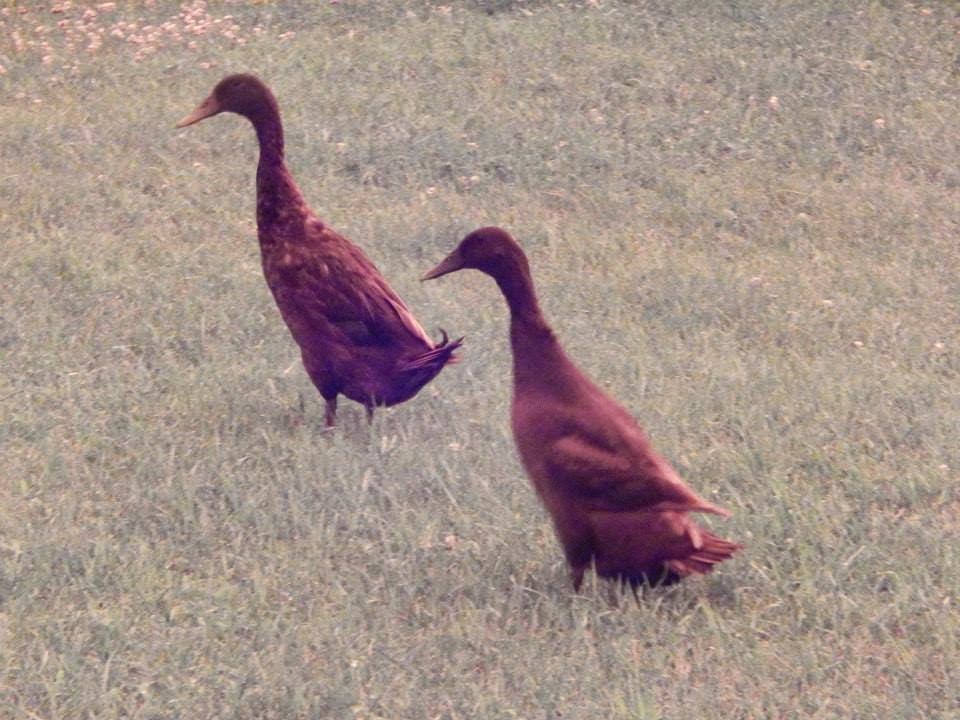 Miss a week or two of picking the green beans, but keep the weeds down and then let the pods start to turn light tan and dry. If you thought you had a lot of green beans, just wait until the dried beans start to show up. I usually give myself some sort of limit as to how long I will pick each day. I typically pick one pillowcase sized sack full any time I have a free hour or so. This is when that little rhyme sets up shop in my brain and refuses to leave until I find myself simply singing it while kneeling in my bean patch.... this can become a monotonous job, but then again, watching a sun set or watching a summer storm quietly build while picking is more meditative than monotonous. And communing with the bees and the beetles as well as the occasional visit from my ducks waddling through would often make this one of the more contemplative jobs that had to be done.
 After each picking, I dump the bag's worth of beans out on my porch to dry. And by dry, I mean the pods have to be so dry that they crack open with relatively little pressure and reveal a dried, black (or brown, or spotted depending on the type) inside. Sometimes this drying takes a day or two and sometimes weeks. It is also largely dependent on whether or not I have time to deal with them - beans drying in the sun are amazingly patient.
When the time is right, pack them back into the bag you picked them with....I know this sounds redundant, but bear with me.
Jump up and down on the bag and then dump them into a large bowl or pail. (My littlest kids think this is great fun) Set up a large house fan on high and, while standing in front of the fan, slowly dump the beans from one pail into another with the air blowing away the chaff. This takes time, but slowly, by crushing the remaining pods and winnowing out the chaff, a hill of beans will emerge. I can usually spend an evening winnowing beans on my porch and end up with 3 - 5 pounds of relatively clean beans by the time the sun sets.
 At this point I usually take the bowl of beans into the house and find a movie that I know by heart and sit down to sort through them by hand to pick out the "bad" ones. This is a completely mindless task, but one that, for one reason or another, is also very soothing - probably because the "finished" beans are so pretty and fun to sink your hands into.
I know....I know....this is a lot of work for a measly hill of beans, but now...those 5 magic beans have become hundreds (if not thousands) of beautiful, protein rich beans that can be saved and eaten through the winter in soups, stews, or even as a most amazing black bean dip. On average, for a family of 7 people, we will have several gallon jugs filled as well as a 3-4 quart jars. These, then, become the staple in chili, ham and bean soup, black bean dip and baked beans.
To cook: Take 1 cup of dried beans and cover with water - place in the fridge overnight to soften. Then, to cook, put in a pot with water and boil until they are soft being sure not to let the water completely boil off. Drain the beans (or don't - depending on the recipe) and use in whatever bean recipe strikes your fancy. This really is ridiculously easy but it does require time and a little planning ahead.
Black Bean Dip
1 cup black beans boiled and soft
(reserve some of the fluid they were boiled in)
1 -2 cloves of garlic
fresh cilantro
salt to taste
Mix the cooked black beans and roughly 1/2 cup of the water they were boiled in, the garlic cloves, cilantro and salt into a blender or food processor and mix until smooth (adding more water if necessary to make a bean dip consistency) Salt to taste and eat with tortilla chips.
I make a batch of this and it is gone before it has time to cool off with hungry kids around.
These beans, these magic beans, are magic in so many ways. Not only do they provide and incredible food source, but while they are growing, their roots bind nitrogen in the soil and help it to become more fertile. They are a restorative crop and one that I plant in areas where the soil was plundered by other crops the last year - crops such as corn which are horribly greedy plants that strip the ground of its nutrients to produce a huge plant that supplies only 2 small ears of edible goodness. Beans, relative to their size produce more edible produce than many of the other plants in the garden.
Yes, they take time to plant, and cultivate, and harvest and dry and process and cook. But there is some magic in that time as well - sunsets watched, rain clouds rejoiced, bees observed, kids laughing and playing rhyming games while weeding, a teenager helping to make bean dip- a connection to the earth, each other, the plants and the food that you grow and harvest with your own hands. There is a strange sort of connectedness in that process.
Not only do they feed the ground and the body ....they feed the soul. Magic indeed.


