Four Mapels

Four Mapels
Showing posts with label gardening. Show all posts

Friday, November 14, 2014

Magic Beans

It has been a while since I have tackled a keyboard and attempted to jot down much of anything. I could say that I have been busy, or lazy, or apathetic...all would be true and also none of them are true.  Sometimes I just  discontinue projects for a time and then come back when the mood strikes, or winter does....whatever it takes to find myself with a little more time and a few thoughts to ponder.

In this case it is beans.

"Beans, beans, they're good for your heart. 
The more you eat, the more you fart. 
The more you fart, the better you feel. 
We should all eat beans at every meal."

This little rhyme, sadly enough, is what is typically trapped in my head from about June until sometime in September because one of the main focuses of the summer season is.....beans.

I can't say that beans are exactly my favorite crop (that honor goes to garlic), but they certainly are a useful one.

They are good early in the season as green beans  At this stage we pick them and eat them almost as fast as we are able and the ones we don't eat, we freeze for winter's lean months.  But, if you get busy and don't get them picked, they dry well and then you can eat them that way too.
They are a forgiving crop and ridiculously easy to grow, and in my life, that counts for a lot.

Beans come in more varieties than I would ever care to name, but there are somewhere in the neighborhood of 40,000 different varieties of beans.  Of course you wouldn't know that living in Iowa....here there seems to only be one....soybean.

Personally, I grow three different varieties - two of them I plant on purpose (one pole and one bush) and the third one is a freelance pole bean that self seeds and sprouts every year and then I just transplant it to where I want it to grow.  My main producer, however is the bush bean known as Black Valentine.  It is a dual purpose bean that makes nice green beans as well as a wonderful dried black bean.  What is the difference between a bush bean and a pole bean? One grows as a bush and one will trail and spiral its way up a tall pole.  In tight spaces the pole beans are nice, but when you have more space and don't want to have to deal with a pole or trellis, bush beans are optimal.

When asking people today where they get their cooking beans, I am almost universally met with a blank stare followed by some line amounting to, "well, we just use canned beans from the store," and then they look at me as though I am just not quite right in the head, I mean, where else would a person get beans, right?  Once again, people have forgotten how ubiquitous beans used to be.

Beans are one of the crops that have been cultivated the longest.  Native Americans would grow them together with corn and squash in a "three sisters" planting - using each of those three plant's best qualities to help the other two grow well. The colonies, and particularly Boston, perfected the baked bean.  From the colonies they were hauled overland in covered wagons and were a large percentage of the diet of the early pioneers - they were high in protein and fiber, transported well, grew well and could be saved for incredibly long periods of time. No cowboy dinner would be complete without a plate full of beans, and what kind of Mexican restaurant would it be without refried beans on the side?

 But chances are, if I put five beans in the palm of a person's hand today, they wouldn't know where to start with growing or cooking them.

So let's start at the beginning.  Someone gives you five magic beans....what do you do?


These beans - they are a fairly large seed in and of themselves.  Easy for even small children to plant.
1/2 - 1 inch down in the ground and roughly 6 -8 inches apart.

Keep them weeded.  Invite your friends to help.

Pick them green when the pods are long and full, but before the seeds inside start to mature.  They should "snap" easily in half - crisp and tender.  At this stage they can be steamed for 7 - 12 minutes until they are bright green and just slightly tender.  Seasoned with salt and butter, they are likely the first vegetables to be devoured at dinner.

Miss a week or two of picking the green beans, but keep the weeds down and then let the pods start to turn light tan and dry.  If you thought you had a lot of green beans, just wait until the dried beans start to show up.  I usually give myself some sort of limit as to how long I will pick each day.  I typically pick one pillowcase sized sack full any time I have a free hour or so.  This is when that little rhyme sets up shop in my brain and refuses to leave until I find myself simply singing it while kneeling in my bean patch.... this can become a monotonous job, but then again, watching a sun set or watching a summer storm quietly build while picking is more meditative than monotonous. And communing with the bees and the beetles as well as the occasional visit from my ducks waddling through would often make this one of the more contemplative jobs that had to be done.


After each picking, I dump the bag's worth of beans out on my porch to dry. And by dry, I mean the pods have to be so dry that they crack open with relatively little pressure and reveal a dried, black (or brown, or spotted depending on the type) inside. Sometimes this drying takes a day or two and sometimes weeks.  It is also largely dependent on whether or not I have time to deal with them - beans drying in the sun are amazingly patient.

When the time is right, pack them back into the bag you picked them with....I know this sounds redundant, but bear with me.

Jump up and down on the bag and then dump them into a large bowl or pail. (My littlest kids think this is great fun) Set up a large house fan on high and, while standing in front of the fan, slowly dump the beans from one pail into another with the air blowing away the chaff.  This takes time, but slowly, by crushing the remaining pods and winnowing out the chaff, a hill of beans will emerge.  I can usually spend an evening winnowing beans on my porch and end up with 3 - 5 pounds of relatively clean beans by the time the sun sets.

At this point I usually take the bowl of beans into the house and find a movie that I know by heart and sit down to sort through them by hand to pick out the "bad" ones.  This is a completely mindless task, but one that, for one reason or another, is also very soothing - probably because the "finished" beans are so pretty and fun to sink your hands into.

I know....I know....this is a lot of work for a measly hill of beans, but now...those 5 magic beans have become hundreds (if not thousands) of beautiful, protein rich beans that can be saved and eaten through the winter in soups, stews, or even as a most amazing black bean dip.  On average, for a family of 7 people, we will have several gallon jugs filled as well as a 3-4 quart jars.  These, then, become the staple in chili, ham and bean soup, black bean dip and baked beans.

To cook:  Take 1 cup of dried beans and cover with water - place in the fridge overnight to soften. Then, to cook, put in a pot with water and boil until they are soft being sure not to let the water completely boil off.  Drain the beans (or don't - depending on the recipe) and use in whatever bean recipe strikes your fancy.  This really is ridiculously easy but it does require time and a little planning ahead.

Black Bean Dip
   1 cup black beans boiled and soft 
(reserve some of the fluid they were boiled in)
1 -2 cloves of garlic
fresh cilantro
salt to taste

Mix the cooked black beans and roughly 1/2 cup of the water they were boiled in, the garlic cloves, cilantro and salt into a blender or food processor and mix until smooth (adding more water if necessary to make a bean dip consistency)  Salt to taste and eat with tortilla chips.

I make a batch of this and it is gone before it has time to cool off with hungry kids around.

These beans, these magic beans, are magic in so many ways.  Not only do they provide and incredible food source, but while they are growing, their roots bind nitrogen in the soil and help it to become more fertile.  They are a restorative crop and one that I plant in areas where the soil was plundered by other crops the last year - crops such as corn which are horribly greedy plants that strip the ground of its nutrients to produce a huge plant that supplies only 2 small ears of edible goodness.  Beans, relative to their size produce more edible produce than many of the other plants in the garden.

 Yes, they take time to plant, and cultivate, and harvest and dry and process and cook.  But there is some magic in that time as well  - sunsets watched, rain clouds rejoiced, bees observed, kids laughing and playing rhyming games while weeding, a teenager helping to make bean dip- a connection to the earth, each other, the plants and the food that you grow and harvest with your own hands.  There is a strange sort of connectedness in that process.

Not only do they feed the ground and the body ....they feed the soul.  Magic indeed.


Sunday, May 11, 2014

Free Food

Every spring I am rewarded for my laziness. While many gardeners and farmers clean up their gardens before the first frost, I become my usual slothful self and decide that I would rather spend what little energy I have left freezing and canning my garden's bounty and skip clean up all together.

It pays off in the spring.

But you have to be patient and pay attention.

All too often in the early spring, I would be in such a hurry to get the garden clean and tilled and ready to plant that I would miss all the food just waiting for me.  I would plow it under before it even showed itself.

Every fall, that lettuce that you didn't take the time to uproot....it goes to seed.
Those cucumbers that you neglected after you had enough pickles made and stored....they went to seed.
That spinach that bolted and became too bitter to eat....it went to seed
That somewhat rotten onion that you didn't want - it sprouted again and is now beautiful
The garlic that you didn't pull....it's back and bigger than last year.
The parsnip you forgot to dig up - they are sweeter than ever now and ready to eat.
And so is that carrot!

And not only that, but Mother Nature is the best almanac for when to plant things you will ever find.  In general, when seeds are naturally sprouting outside in the cold spring, it means those seeds can handle it, so if you want to start neat and tidy rows of food, you probably can - even though the almanac and the seed packets may say otherwise.

There are all kinds of wives tales about "what is the best time to plant _____?"  For corn it is when oak leaves are the size of a squirrel's ear.  I don't know how many people have actually even seen a squirrel's ear?  I tend to just wait for the random forgotten ear of corn to suddenly sprout into action.  Even after a long, sub-zero winter, it will happen.

This is, of course, provided you use seeds that haven't been genetically modified to only sprout once.  Heirloom quality seeds or organic seeds cost more, but they will more than pay you back in their ability to produce fantastic quality foods with minimal work (or in this case, no work), year after year .


So, while other enterprising gardeners are busy cleaning, tilling and planting, I am busy harvesting the fresh spinach and lettuce from the garden - the first crop of greens so long awaited in the many months of cold.

 What we don't immediately harvest and eat, I transplant into more recognizable and organized rows.  The transplanting slows it down a bit and extends the season for a few more weeks.

So many times while gardening I have marveled at man's belief that we know what we are doing and are "in charge" of growing food.  While it is true that we are the caretakers of the produce, Mother Nature already has the system down and knows the perfect timing and temperature for it all.

Thursday, September 1, 2011

Little Garden of Horrors

I'm not entirely sure when it happened, but at some point in the last month I completely lost all control of the garden.  The hot weather and humidity, while not good for the crops, apparently has no effect on the weeds. The spring always starts with the best of intentions to keep it well organized and weeded, but I have now come to realize that the weeds have become so thick that I will have to mow them down just to be able to get to the garden gate, much less through it.  Yesterday, while pulling weeds fiercely determined to find the ground under all the nightshade and crab grass, I unearthed a shovel that the weeds had absconded with - and not a "hand shovel" a full sized shovel!  It has become a bit of a jungle out there, and not in a good way.

 I start to envision being tripped up by the sweet potato vines and quietly covered over and devoured like some garden horror flick.  The tomatoes have out-grown their cages and are now about six feet tall and sprawling all over the ground.  My son and I tackled them yesterday and tied up the trailing vines as best as we could - they tend to get a little unruly at this stage.  I had him help me because, quite frankly, I was almost afraid of taking on that job by myself - I need someone to run for help after they overwhelm me.  Two hours and 18 tomato plants later, we emerged covered in tomato "dust" - the greenish/yellow iridescent pollen that made us both look like green wood nymphs and with hands so green they appeared black.  One project down....two million more to take on. 

Not only are the weeds and plants completely out of control, but the list of "to do" things becomes increasingly longer with more and more things to harvest and store. 
  • The potatoes are still to be dug, dried, and then stored. 
  • The peppers need to be harvested and then chopped and frozen, or grilled and then frozen. 
  • The beans are to be picked, shelled, dried and stored. 
  • The herbs - cut, dry, store. 
  •  Tomatoes - harvested, processed either by making into marinara, salsa, pizza sauce, or frozen. 
  • Strawberry patch - that just needs a good weeding and mulching so it is ready for next spring. 
  •  Lettuce - almost time to plant a few more rounds now that it is cooling off a little again. 
  • Sunflowers - seeds to be harvested, dried, brined and roasted. 

Just typing that list makes me tired and desperate for a nap.  I always think of Spring as such a busy time, but in all honesty fall is ten times worse in so many ways - why do I always forget that?  Maybe fall harvest is like child birth....there is something inherently built in our psyche that makes us forget how awful it was so that we will somehow be tricked into doing it again, and only as the pains of labor start does the memory come back.

I bought myself a present this year in preparation for the harvesting, freezing, processing, canning, storing nightmare that I am in building up to- a food processor.  If there is anything that takes a ton of time, it is all the chopping.  Most of the time I have done it manually, but when my typically marinara recipe starts by saying, "chop three large onions" and I would stand over a cutting board crying my eyes out for 40 minutes, well suffice it to say, it was never the highlight of the day.  The one that I purchased isn't very big, but it does the job and my kids fight over being the ones to push down the handle and chop the food.  I wonder how long that will last?

I am sure that at some point - probably into my thirtieth quart of marinara, I will stop caring about the weeds and the horrors that live in my garden and I will completely let it go to pot, venturing down there only to nab whatever produce I can before it is engulfed by the other viney vegetation.  Then I will stand on the porch and simply long for the first hard frost to kill it off and when that happens, then.....then I will take a nap.

Monday, December 13, 2010

Raising Tea

I love herbal tea. It is the English in me. Tea, in the day, was all there was for medicine and really, many of today's medicines are simply distillates from plants. Digoxin, a potent heart medication is a derivative of Foxglove, a lovely flower that grows in my yard. Aspirin is a derivative of the Aspen tree bark. Penicillin is derived from a mold that blows about on the very wind. Ask any herbalist or homeopath and they will be able to expound the virtues or terrors of thousands of plants, flowers and herbs. It is very enlightening to talk with people that know and use medicinal plants regularly because you come to realize how much nature provides for us. For almost every ill there is a cure. The hardest part is just figuring out which one will work best for you and where you can find them. I remember the exact moment that I fell in love with flower gardening. I was kneeling on a small triangular plot of soil at my old house in Winona. I had just dug out the soil and had it piled up next to me and I was planting hyacinth bulbs and daffodil bulbs that would come up the next spring. Maybe it was the day - it was a beautiful fall day with the light shining on my back, the soil still warm under my hands and the air so crisp and clean. All was right with the world in that one moment - the light, the air, the humus, ... I fell in love with gardening. Now, I had grown a vegetable garden when I was going to school in Iowa, but I hadn't fallen in love with that type of gardening. That seemed like a lot of work at the time....still does to some extent, but suddenly flowers were my thing. The house in Winona was also the first place that I started to grow some herbs, but then life intervened and we moved to LaCrosse and it was crazy busy with two full time jobs and three kids and before I knew what happened we were here on the farm in Iowa. There wasn't much to the yard in terms of flowers when I first moved in. There was an old rose bush and a few bulbs that popped up in the spring, but other than that, not much to work with ....But, now I had room and time - two things that are very helpful when planning a big flower garden. My husband would probably say that I have gone completely over board. Approximately 85 percent of the front yard has been taken over by my flower gardens and I have my eye on the other 15 percent still requiring a lawn mower. I love taking the "morning constitutional" through the flower gardens. They are more my sanity gardens than anything. My gardens are where I hide from my children, but am still close enough to the house to hear any of them if they truly need me. Flowers are strictly beautiful, something pretty to look at that soothes the soul, but herbs are flowers with a mission. They are kind of a cross over. They aren't flowery and showy, but many of them will, at some point in their lives, produce flowers that the butterflies and hummingbirds absolutely love. My herb garden started out small. A little oregano, a little basil and a few chamomile plants. My downfall (or so my husband would likely term it) is the garden center next to the grocery store. How convenient! For a while I think I would buy $30 worth of groceries and $75 worth of plants! And when I wasn't buying plants, I was buying books to better understand the plants and where they would grow best. Suffice it to say, I now have a fair number of herb and plant books that help to select which ones will grow the best in my area and what they can be used for. I also have acquired a fair number of books explaining how to make useful things out of herbs, not the least of which....is tea!
So What's The Difference?
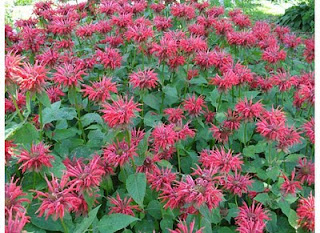
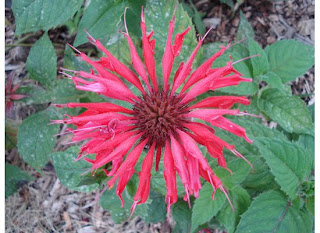
The tea that you buy in the store is usually good, it comes in little bags and there are sometimes wonderful sayings on the box or on the tags of each individual bag, but it has been around a while. It has probably been factory farmed, dried, processed, mixed, bagged, boxed and then shipped. Fresh is always best....and by fresh I mean picked off the plant and put into tea. This is hard to do in Iowa in the winter. So, I play the part of a squirrel and during the summer I collect plants and flowers and squirrel them away for later use in the dark, cold days of winter. The wonderful thing about most of the herbs and flowers that make the best tea - they grow like weeds and often are weeds. My bee balm happily reseeds itself every year.....all over the garden. Every spring I have to patiently either remove it from its new favorite spot and put it back where it belongs (in my mind at least), or I let it run wild and form beautiful drifts of color in mid summer. As you can see from the picture, I prefer the later of the two options. Who am I to say where a flower will grow best. No flower I have ever known has read the text books....they like what they like. Actually, one of the most obnoxious weeds, stingy nettle, makes a very nice tea. While I was out hunting mushrooms this last spring, I was completely skunked in finding any morels on many days, but I did go through many lovely nettle patches. Nettle, although very painful to work with (especially when you find yourself without a pair of gloves),it does make a great tea that is very good for people with respiratory problems. On the days that I didn't bring home mushrooms, I brought home bags full of stingy nettle instead. Herbs are wonderful things to grow. A little sun, a little rain and they are good to go. It takes almost nothing to make herbs completely happy. So happy, in fact, that they will spread themselves all over the garden to the point of becoming a nuisance. My Lemon Balm has taken on this trait. Every time I turn my head, it has gone wild and spread itself everywhere. Thankfully, it is one of my favorite teas, so I am never without in the winter months. And weeding it out a garden full of unwanted Lemon Balm leads to the most wonderful citrus smell filling the air. Calendula, is another of my favorite all purpose, flower, herb and medicinal plants that loves to spread itself all over the garden....but really, who would be unhappy to see this gorgeous flower growing in their yard? So, the growing of herbs for teas is definitely NOT a problem! The control of them might be.
When to Harvest
For most plants that will be used as tea, the best time to harvest is before they flower. This works well for the flower garden as well because if you remove to tops of some of the herbs they form their flowers later in the season and prolong the flowering time overall. The one exception to the rule of picking before they flower is Chamomile....those you actually pick the flowers - which seems almost cruel to do to those cute daisy-like flowers, but I enjoy them ten times more in the middle of winter. Chamomile flowers I simply toss in a freezer bag in the freezer right away, without drying, to maintain all their freshness.
The best time of day to harvest is usually in the early mornings when the essential oils and nutrients are highest in most of the herbs....but there are the occasional plants that are better to pick at night - this is where the books sometimes come in handy. I tend to not pay much attention to what time of day I am picking as long as I get them hung up to dry right away.
Drying is a piece of cake. A sharp scissors, a piece of string or rubber band and someplace to hang them where they can dry. I tend to not put them in direct sunlight as that seems to bleach the leaves out while they are drying and I can only imagine that it causes them to loose during that process. Typically, an upside down tomato cage works very well, but really any place in my kitchen has been known to have herbs drying on them. I tie small bundles together and then hang them upside down to dry for a few weeks. If the weather is exceedingly humid like it was this last summer, I dry them a few minutes in a 250 degree oven and then strip off their leaves, put them in plastic Ziploc bags and put them in the freezer, or I put them in air tight containers for the winter. I have one entire freezer and one shelf of my cupboard packed with these herbs.
A list of the herbs that I have grown and saved for this winter include:
  • Bee Balm
  • Chamomile
  • Stingy Nettle
  • Peppermint
  • Lemon Balm
  • Rosemary
  • Thyme
  • Sage I could add Catmint to this list, but that never seems to make it past my cats.

Every one of those herbs listed is a perennial, except for the Rosemary. That means that every year, without fail, those herbs come back (typically with a vengeance) and all I have to do is pick them and dry them to be fully stocked with tea all winter long. When it was just me, this didn't take much, but my kids have now latched on to the tea and how wonderful it is, so my stock pile has grown.

A Spot of Tea

To make a great cup of tea, as only the English (and the Japanese) can do, you need only three things: Loose tea leaves, a pot and boiling water. It helps, however, to have an actual tea pot. This one came to me by way of a friend, who, when hearing that I had an interest in loose leaf tea, managed to come across this little gem at a thrift shop. I have yet to find another like it, but I am always on the lookout. The basket holds the tea leaves and keeps most of them from finding their way into your tea.....but lets just enough through for a reading of the tea leaves later.

If you don't have an official "tea pot" then a regular coffee pot will work and then just strain the tea through a coffee filter as you pour it into your cut to filter out the loose tea leaves. And, as a complete aside, the chickens absolutely love the left over soaked tea leaves in their daily ration.

Use whatever tea leaves you have stored. In my case I usually like a mix of Lemon Balm, Peppermint and Chamomile, but I vary it sometimes to include Sage, Rosemary, Thyme, Cinnamon, Bee Balm, Nettle, Cayenne Pepper (very good for the digestion), or Ginger....whatever combination you feel like dreaming up or (better yet) what you feel your body needs. I am always amazed at the intuitive sense of our own bodies. There are many times when I will be making a pot of tea with some nagging problem lurking, - a head ache, an upset stomach, a sore throat, etc. So, I toss in the pot what I feel will make a good tea for that night and then while it steeps I look up in one of my many herb books what the herbs that I am using are supposed to be good for. Nine times out of ten, I have put together a tea that is good for what ails me. This last Friday, my daughter came to me with a horrible sore throat and a fever. Great! Going into the weekend, no doctor's office open and what looked like the makings for Strep throat. Gave her some ibuprofen and made some tea that was heavy on Thyme and Cayenne pepper. Hot tea with honey can cure just about anyone of anything. As she finished her tea, she came over to me and said, "hey Mom, my throat doesn't hurt anymore!" By Monday, she was doing great...no more sore throat. Chances are good that it was just a passing virus, but even then....3 days is a pretty good recovery time if you ask me.

The most important step to making a great cup of tea is to let it steep. Minimum of 5 minutes and really the longer it steeps the better. My husband will often find that I have left tea in the tea pot overnight when he goes to clean it. He poured one such cup of tea in a cup for me to reheat and I thought it was a cup of coffee because it was so dark in color - it was wonderful! I am also a big proponent of the "tea cozy". Keeping your tea pot warm with the steeping tea inside helps to bring out more flavor. A little honey added for sweetening and you will have the perfect cup of tea.

Followers