
Four Mapels

Four Mapels
Showing posts with label Seed Savers. Show all posts

Friday, November 14, 2014

Magic Beans

It has been a while since I have tackled a keyboard and attempted to jot down much of anything. I could say that I have been busy, or lazy, or apathetic...all would be true and also none of them are true.  Sometimes I just  discontinue projects for a time and then come back when the mood strikes, or winter does....whatever it takes to find myself with a little more time and a few thoughts to ponder.

In this case it is beans.

"Beans, beans, they're good for your heart. 
The more you eat, the more you fart. 
The more you fart, the better you feel. 
We should all eat beans at every meal."

This little rhyme, sadly enough, is what is typically trapped in my head from about June until sometime in September because one of the main focuses of the summer season is.....beans.

I can't say that beans are exactly my favorite crop (that honor goes to garlic), but they certainly are a useful one.

They are good early in the season as green beans  At this stage we pick them and eat them almost as fast as we are able and the ones we don't eat, we freeze for winter's lean months.  But, if you get busy and don't get them picked, they dry well and then you can eat them that way too.
They are a forgiving crop and ridiculously easy to grow, and in my life, that counts for a lot.

Beans come in more varieties than I would ever care to name, but there are somewhere in the neighborhood of 40,000 different varieties of beans.  Of course you wouldn't know that living in Iowa....here there seems to only be one....soybean.

Personally, I grow three different varieties - two of them I plant on purpose (one pole and one bush) and the third one is a freelance pole bean that self seeds and sprouts every year and then I just transplant it to where I want it to grow.  My main producer, however is the bush bean known as Black Valentine.  It is a dual purpose bean that makes nice green beans as well as a wonderful dried black bean.  What is the difference between a bush bean and a pole bean? One grows as a bush and one will trail and spiral its way up a tall pole.  In tight spaces the pole beans are nice, but when you have more space and don't want to have to deal with a pole or trellis, bush beans are optimal.

When asking people today where they get their cooking beans, I am almost universally met with a blank stare followed by some line amounting to, "well, we just use canned beans from the store," and then they look at me as though I am just not quite right in the head, I mean, where else would a person get beans, right?  Once again, people have forgotten how ubiquitous beans used to be.

Beans are one of the crops that have been cultivated the longest.  Native Americans would grow them together with corn and squash in a "three sisters" planting - using each of those three plant's best qualities to help the other two grow well. The colonies, and particularly Boston, perfected the baked bean.  From the colonies they were hauled overland in covered wagons and were a large percentage of the diet of the early pioneers - they were high in protein and fiber, transported well, grew well and could be saved for incredibly long periods of time. No cowboy dinner would be complete without a plate full of beans, and what kind of Mexican restaurant would it be without refried beans on the side?

 But chances are, if I put five beans in the palm of a person's hand today, they wouldn't know where to start with growing or cooking them.

So let's start at the beginning.  Someone gives you five magic beans....what do you do?


These beans - they are a fairly large seed in and of themselves.  Easy for even small children to plant.
1/2 - 1 inch down in the ground and roughly 6 -8 inches apart.

Keep them weeded.  Invite your friends to help.

Pick them green when the pods are long and full, but before the seeds inside start to mature.  They should "snap" easily in half - crisp and tender.  At this stage they can be steamed for 7 - 12 minutes until they are bright green and just slightly tender.  Seasoned with salt and butter, they are likely the first vegetables to be devoured at dinner.
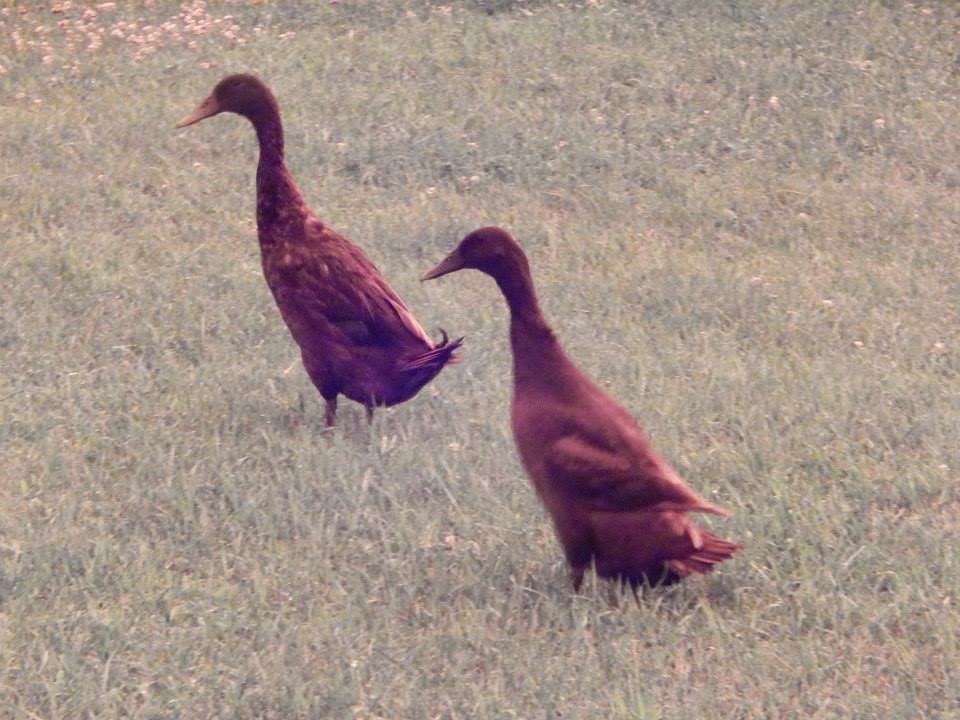
Miss a week or two of picking the green beans, but keep the weeds down and then let the pods start to turn light tan and dry.  If you thought you had a lot of green beans, just wait until the dried beans start to show up.  I usually give myself some sort of limit as to how long I will pick each day.  I typically pick one pillowcase sized sack full any time I have a free hour or so.  This is when that little rhyme sets up shop in my brain and refuses to leave until I find myself simply singing it while kneeling in my bean patch.... this can become a monotonous job, but then again, watching a sun set or watching a summer storm quietly build while picking is more meditative than monotonous. And communing with the bees and the beetles as well as the occasional visit from my ducks waddling through would often make this one of the more contemplative jobs that had to be done.


After each picking, I dump the bag's worth of beans out on my porch to dry. And by dry, I mean the pods have to be so dry that they crack open with relatively little pressure and reveal a dried, black (or brown, or spotted depending on the type) inside. Sometimes this drying takes a day or two and sometimes weeks.  It is also largely dependent on whether or not I have time to deal with them - beans drying in the sun are amazingly patient.

When the time is right, pack them back into the bag you picked them with....I know this sounds redundant, but bear with me.

Jump up and down on the bag and then dump them into a large bowl or pail. (My littlest kids think this is great fun) Set up a large house fan on high and, while standing in front of the fan, slowly dump the beans from one pail into another with the air blowing away the chaff.  This takes time, but slowly, by crushing the remaining pods and winnowing out the chaff, a hill of beans will emerge.  I can usually spend an evening winnowing beans on my porch and end up with 3 - 5 pounds of relatively clean beans by the time the sun sets.

At this point I usually take the bowl of beans into the house and find a movie that I know by heart and sit down to sort through them by hand to pick out the "bad" ones.  This is a completely mindless task, but one that, for one reason or another, is also very soothing - probably because the "finished" beans are so pretty and fun to sink your hands into.

I know....I know....this is a lot of work for a measly hill of beans, but now...those 5 magic beans have become hundreds (if not thousands) of beautiful, protein rich beans that can be saved and eaten through the winter in soups, stews, or even as a most amazing black bean dip.  On average, for a family of 7 people, we will have several gallon jugs filled as well as a 3-4 quart jars.  These, then, become the staple in chili, ham and bean soup, black bean dip and baked beans.

To cook:  Take 1 cup of dried beans and cover with water - place in the fridge overnight to soften. Then, to cook, put in a pot with water and boil until they are soft being sure not to let the water completely boil off.  Drain the beans (or don't - depending on the recipe) and use in whatever bean recipe strikes your fancy.  This really is ridiculously easy but it does require time and a little planning ahead.

Black Bean Dip
   1 cup black beans boiled and soft 
(reserve some of the fluid they were boiled in)
1 -2 cloves of garlic
fresh cilantro
salt to taste

Mix the cooked black beans and roughly 1/2 cup of the water they were boiled in, the garlic cloves, cilantro and salt into a blender or food processor and mix until smooth (adding more water if necessary to make a bean dip consistency)  Salt to taste and eat with tortilla chips.

I make a batch of this and it is gone before it has time to cool off with hungry kids around.

These beans, these magic beans, are magic in so many ways.  Not only do they provide and incredible food source, but while they are growing, their roots bind nitrogen in the soil and help it to become more fertile.  They are a restorative crop and one that I plant in areas where the soil was plundered by other crops the last year - crops such as corn which are horribly greedy plants that strip the ground of its nutrients to produce a huge plant that supplies only 2 small ears of edible goodness.  Beans, relative to their size produce more edible produce than many of the other plants in the garden.

 Yes, they take time to plant, and cultivate, and harvest and dry and process and cook.  But there is some magic in that time as well  - sunsets watched, rain clouds rejoiced, bees observed, kids laughing and playing rhyming games while weeding, a teenager helping to make bean dip- a connection to the earth, each other, the plants and the food that you grow and harvest with your own hands.  There is a strange sort of connectedness in that process.

Not only do they feed the ground and the body ....they feed the soul.  Magic indeed.


Sunday, May 11, 2014

Free Food

Every spring I am rewarded for my laziness. While many gardeners and farmers clean up their gardens before the first frost, I become my usual slothful self and decide that I would rather spend what little energy I have left freezing and canning my garden's bounty and skip clean up all together.

It pays off in the spring.

But you have to be patient and pay attention.

All too often in the early spring, I would be in such a hurry to get the garden clean and tilled and ready to plant that I would miss all the food just waiting for me.  I would plow it under before it even showed itself.

Every fall, that lettuce that you didn't take the time to uproot....it goes to seed.
Those cucumbers that you neglected after you had enough pickles made and stored....they went to seed.
That spinach that bolted and became too bitter to eat....it went to seed
That somewhat rotten onion that you didn't want - it sprouted again and is now beautiful
The garlic that you didn't pull....it's back and bigger than last year.
The parsnip you forgot to dig up - they are sweeter than ever now and ready to eat.
And so is that carrot!

And not only that, but Mother Nature is the best almanac for when to plant things you will ever find.  In general, when seeds are naturally sprouting outside in the cold spring, it means those seeds can handle it, so if you want to start neat and tidy rows of food, you probably can - even though the almanac and the seed packets may say otherwise.

There are all kinds of wives tales about "what is the best time to plant _____?"  For corn it is when oak leaves are the size of a squirrel's ear.  I don't know how many people have actually even seen a squirrel's ear?  I tend to just wait for the random forgotten ear of corn to suddenly sprout into action.  Even after a long, sub-zero winter, it will happen.

This is, of course, provided you use seeds that haven't been genetically modified to only sprout once.  Heirloom quality seeds or organic seeds cost more, but they will more than pay you back in their ability to produce fantastic quality foods with minimal work (or in this case, no work), year after year .


So, while other enterprising gardeners are busy cleaning, tilling and planting, I am busy harvesting the fresh spinach and lettuce from the garden - the first crop of greens so long awaited in the many months of cold.

 What we don't immediately harvest and eat, I transplant into more recognizable and organized rows.  The transplanting slows it down a bit and extends the season for a few more weeks.

So many times while gardening I have marveled at man's belief that we know what we are doing and are "in charge" of growing food.  While it is true that we are the caretakers of the produce, Mother Nature already has the system down and knows the perfect timing and temperature for it all.

Wednesday, March 9, 2011

And So It Begins....

It's March....at last. We have finally reached that magic "6-8 weeks before the last frost" range. Time to start the spring planting.
Most traditional farmers won't be in their field yet until sometime in April or May. I never claimed to be traditional....I bring the dirt inside.
It is almost frightening how simple it is to grow things. A little seed, soil, water, sunshine and love and you have yourself meals for a year. So, on a sunny Sunday I pulled out of the cupboard all the seeds that I had saved for the year and sorted through them. There are the piles of seeds that need to be directly seeded in the ground when it warms up a bit, there are the seeds that are reserved for kids to plant, and then there are the wonderful can be started indoors 6-8 weeks before the last frost plants.
I tracked down the trays that I use from year to year. These are approximately $10 at any hardware or garden store and, if you use them carefully, can be used year after year. I dumped out any and all remaining soil that was still clinging to the sides of the trays, rinsed them in dilute bleach solution to be sure there clean and virus free. We have found that cardboard egg cartons also work well and can be torn apart and planted directly in the dirt when the seeds are ready to transplant.
The trays are filled and the soil moistened with a little water to make planting easier. A bag of dirt can go a long way. I go for organic stuff if I can just as a standard of practice - less chemicals typically equals healthier foods. I tried my own compost once and that works as well- as long as you can recognize the seeds that will be emerging - typically compost will still harbor weed seeds that can take over, so I tend to stick with the bag of purchased dirt....one bag can start my entire garden and then some.
I survive the winter on the anticipation of playing in the dirt. It doesn't matter that it is still cold outside or that the dirt is in a bag - it is still dirt. I have found this small spring celebration to be quite an attraction and will have at least one kid that wanders by and says, "Oh! Can I help!" to which I somewhat reluctantly say, "Of course!" and hand over my seeds and my tweezers to them while I continue filling trays and labeling what they have planted.
A little warm water shower from the sink, a cover to keep them warm and moist, a sunny spot in the sun and voila! - three days later....the makings of coleslaw start poking up with onions, leeks, tomatoes, peppers, and broccoli to follow soon after.
My kids sometimes ask me about my perception of "God" and quite honestly, this is what I show them - the miracle of a seed - be it animal or vegetable. A small packet of genetic information that holds within it the blueprint to build another such being with similar, but not identical, characteristics. What I find so completely amazing is the complexity of the different species and how all of that is contained in something as small as (or in the case of animals - smaller than ) the head of a pin. That level of complexity and planning amazes me and the fact that I choose which seeds to plant and maintain gives me pause because now I, too, have a hand in what genetic information is propagated in the world. I take this responsibility very seriously. I see these tiny little seedlings not only as plants that I will one day eat, but they are the source of more seeds that I will rely on next year to plant again. They have lives and progeny and generations just like people do. They are very important beings in the world. Just because they don't have legs to move about and they eat soil doesn't mean that they are necessarily any less important than the rest of us. These thoughts often lead to me donating any extra seedlings to people to plant at their houses because I simply can't stand the thought of wasting even one.
So, it has begun. My family has grown to include these little seedlings that I will look after, care for, glean food from, and use to propagate next year's seeds. The Chinese know it best, "One who plants a garden, plants happiness. If you would be happy all your life, plant a garden."

Sunday, December 19, 2010

Like a Kid at Christmas

My favorite of all favorite catalogs came yesterday. It comes only once a year and I treasure it all year long. I cut pictures of from it to use in various places, I dream about all the fun stuff that lies within it and I drool over the pictures and imagine what it would be like to have one of each. I am worse than any kid approaching Christmas with a toy catalog in their hands.
It is my Seed Savers catalog. This thing is amazing!
Seed Savers is a company out of Decorah, Iowa that exists to provide heritage and heirloom seeds. These are seeds that will reproduce produce year after year that is of consistent quality.
There are other seed companies in the world, such as Monsanto and Novartis and many others that you will see with their names in very small print on the packets of seed that you buy in the stores-those seeds are raised to provide produce for one year only and if they do happen to come up the next year they are typically of inferior quality and will never make it to a third year.
They have genetically modified the seeds that are produced to be unable to produce viable seeds of their own (sterile seeds), thus ensuring that you will need to buy more seeds next year as well. It keeps them in business. Monsanto has taken this to the extreme and trademarked their modified genes. If any farmers are caught storing their seed, they are sued and not many small farmers can stand up to the agribusiness giant.
Seed Savers is NOT that type of company. They work to provide the best quality seeds they possibly can knowing that if they are saved by the purchaser, they will provide even more seeds for the future. They are dedicated to storing seeds of countless varieties of vegetables to protect them for future generations.
One of the most dangerous problems that we run into with producing crops is the loss of variety. We are turning into a monoculture of vegetables - corn. It is in everything! And much of the corn produced is Monsanto corn (at least in the Midwest). A single culture of anything is not healthy for the environment.
Think of this from a honey bee's perspective. Thousands of acres and only one plant for pollen....corn. And honey bees don't usually use corn for pollen. With the lack of other pollen options due to herbicide use, huge numbers of bees get lost. One day of spraying insecticide on the crops while the bees are busy...more bees wiped out, or worse yet, they take the insecticide back to the hive and pollute the hive with it. A bee, without options, will not do very well. Think of the bees as a the proverbial "canary in the mine"....if the canary comes up dead that is a good indication that the mine isn't safe.....the bees are coming up dead. Colony Collapse Disorder is becoming more and more of a problem - one in which they don't completely understand the cause, but regardless, I think we should be taking it as a warning sign that things are not looking good for the bees.....or us.
So, it is because of their business policy and their mission, Seed Savers is the only place that I buy seeds for my summer vegetable garden. I have purchased many of the seeds and saved many from year to year with great success, yet somehow I still feel compelled to try new varieties and new fruits and vegetables. Their seeds cost a little more, but if you consider that they send with them instructions on how to save them for the next year, it is really more of an investment.
This is the time that the garden starts. Now, while there is still snow on the ground and a ton more to fall yet this winter, while the days are way too short and the nights incredibly long....now is the time that the garden gets planned for the year. I pull out the drawings from the last few years for where everything was planted and I contemplate how much energy I may or may not have. I think about how many kids will need 4-H projects to grow and how much work I can con them into. I count how many seeds I was able to save from last year (or the year before) and contemplate the germination percentage. I read through my garden journal from last year to determine which crops were the best and which ones I should pass over.
Corn....I will need new and different corn. This is one of the problems with trying to raise heirloom quality seeds amidst and ocean of field corn. I had wonderful corn two years ago and I saved the seed. Problem was there was genetic drift from the field corn that first year so the second year that I tried to grow the corn, it had taken on some of the characteristics of the field corn and didn't produce as well. Chances are good that I had acquired some of Monsanto's trademark genes much to my dismay. Don't want them - they didn't do my corn any good.
Heirloom seeds tend to produce very vigorous plants and, if you stick with one variety you can keep your seeds very pure. When the varieties start to mix however, you can come up with some interesting crops....like the 'cuash' that I grew a few years ago - a cross between a cucumber and a squash. Needless to say, these are not typically the seeds that I keep.
And then there are the seeds that are hard to harvest - carrots, for instance, have to be grown for two years before they will produce seeds - this can be a bit of a trick and not something that I typically tackle. It has happened by accident now and then, but that is really more a process of chance and poor tilling in the spring.
This year we are planning to expand the garden. We have just cut into our last onion for the winter, so we will definitely need a few hundred more onions to plant for next year. Carrots we ran out of sometime in September. Trying to grow enough to supply a family of seven through an Iowa winter can be a definite challenge.
The potatoes that I picked out last year - German Butterballs - didn't produce very well and despite the fact that they are supposed to be excellent keepers, you can't keep what you weren't able to produce in the first place, so I will be switching back to Yukon Gold Potatoes because they produced bushel after bushel of potatoes that lasted through most of the winter, and they were huge!
One of my favorite of all crops to grow is tomatoes. I, personally, cannot eat a raw tomato....it's a consistency thing. But any and everything made out of tomatoes are my favorites. I toss them in salads, I make bruschetta, I make pizza sauce and can marinara for the winter. I usually manage to put up about 45 quarts of marinara every year using a recipe that I found in the wonderful book by Barbara Kingsolver, Animal, Vegetable, Miracle. I plant Amish Paste tomatoes that make a magnificent sauce and the seeds have kept and germinated nicely year after year. Typically 13 tomato plants is enough to provide a family of 7 with home made spaghetti sauce every week for the entire year.
I could go on for days about the wonders of the seeds contained within this catalog. There is no other seed catalog that comes that can match it....and trust me, I get a lot of seed catalogs. So, the wind may blow and the snow may fall, but I rest easy in the knowledge that spring is coming. How do I know it is coming? Because the Seed Savers Catalog is here.

Followers